
The Water Guardians
Investigative photojournalism story launch
Times are wild and there are so many different urgent issues demanding our attention at any given moment.
But despite a news cycle which bombards us with perpetual bad news, there are also so many incredible people driving sustainable, equitable and transformative change for our planet.
At the beginning of each new year I take some time to reflect on the previous year and strengthen my vision for what’s ahead. If I’m honest, the beginning of this year felt especially chaotic — war, climate change, global instability and so much injustice. It took me a little longer this year to get clear about where to focus my energy as we move into 2026.
As I sat in this space, reflecting on all that’s unfolding, there was one story which continued to rise to the surface for me, whispering — “I need to be told”.
Our oceans and rivers do so much for us — from stabilising our climate to sustaining livelihoods, supporting biodiversity, protecting our coastlines and so much more. Our waterways are central to our health, our economies and our communities.
On a personal note, the ocean is truly my happiest place and a big reason why I moved to Australia. But in recent years, serious water quality issues have been emerging across the country.
Last year, a massive algal bloom in South Australia killed thousands of marine animals and devastated local fishermen and tourism operators.
The year before, the Great Barrier Reef experienced a catastrophic bleaching event, which I documented firsthand.
And here at home in the Northern Rivers, disturbing signs of ecosystem decline are also emerging — algal blooms, black water events, fish kills, pollution and rising wildlife illness.
I’ve been documeting a population of sea turtles whose health has declined before my eyes. Once swimming easily with shiny shells and bright eyes, I find these turtles off the coast of Byron Bay now covered in tumours, emaciated, sunken eyes and often struggling to swim.
Up and down our coast, wildlife rescues have been indundated with sick turtles — and the answers why are not clear.
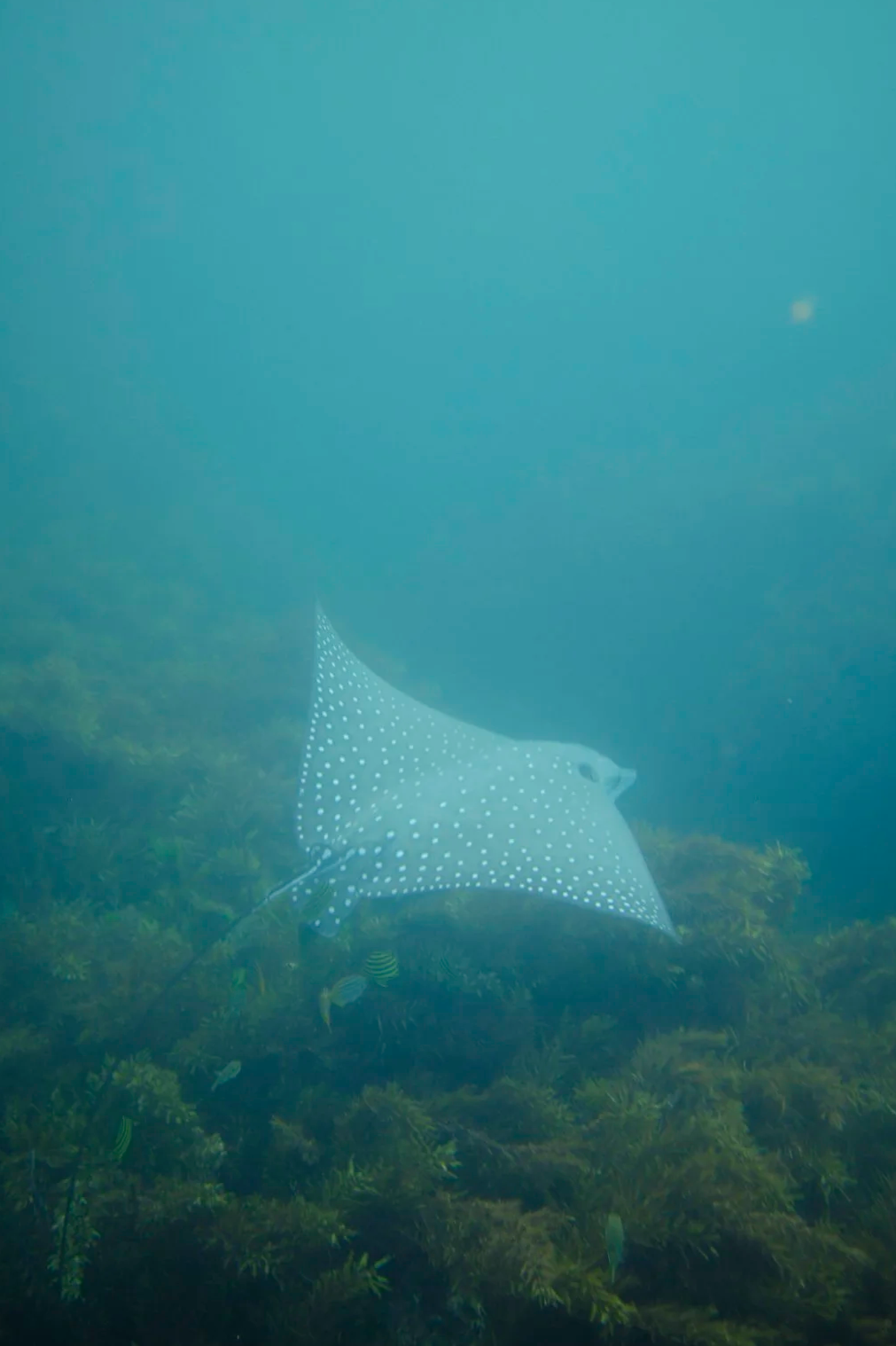
Spotted Eagle Ray | March 2026 © Olivia Katz Photography
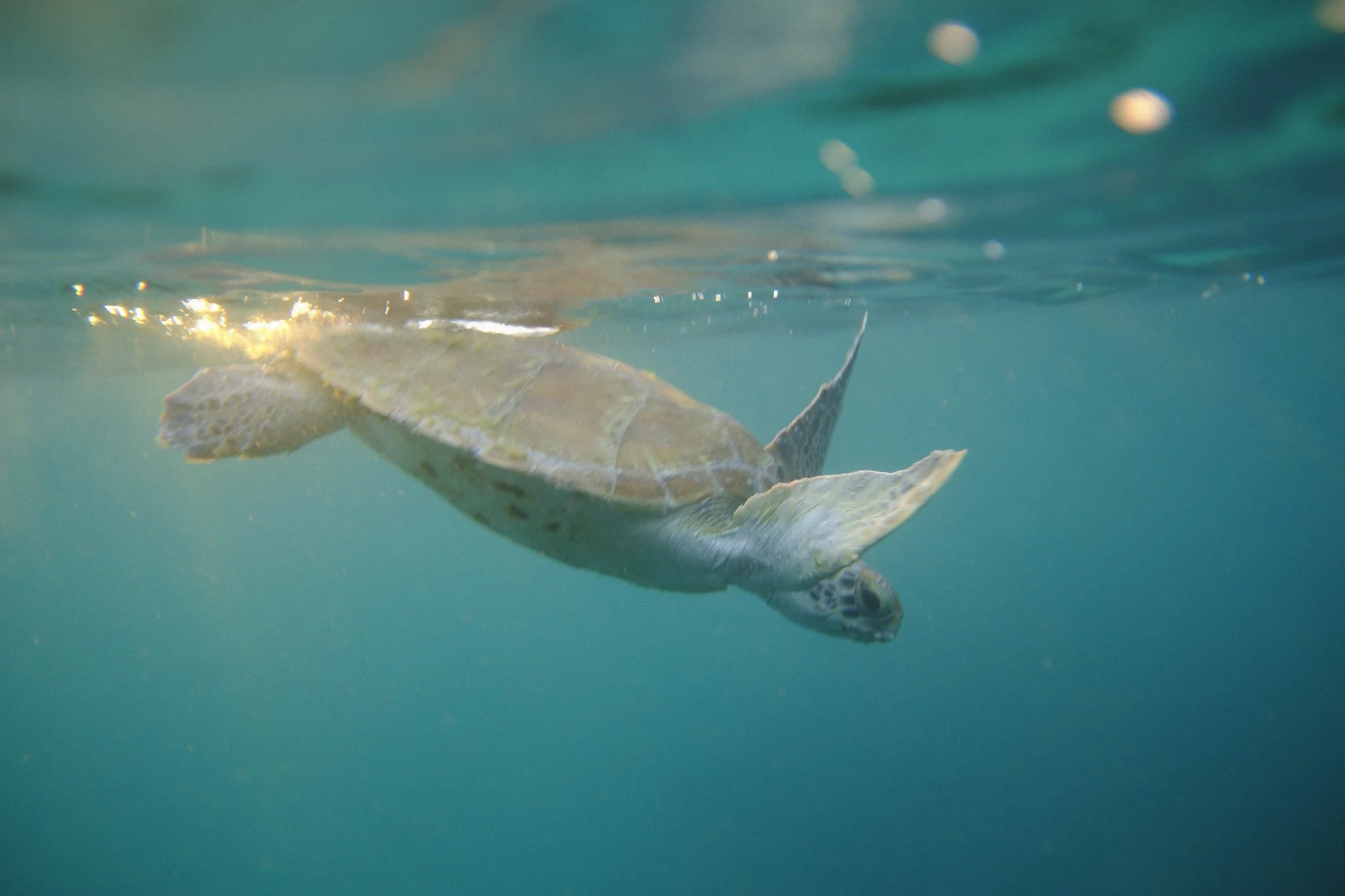
A sick sea turtle swimming off the coast of Byron Bay | February 2026 © Olivia Katz Photography
Turtles are migratory which makes pinning their illness to certain territories difficult. But recently, I was informed that our local dolphins who call this coastline home all year round — are also unwell.
I’m deeply concerned about what this means for the future and motivated to understand what can be done to improve the health of our local waterways.
So I’ve begun developing a new storytelling project to investigate water health issues across the Northern Rivers — and to amplify the voices of those working to protect and restore these ecosystems.
The Water Guardians Project Summary:
The Water Guardians is an investigative photojournalism project exploring the health of waterways across the Northern Rivers of New South Wales. Through photography, interviews and narrative reporting, the project documents emerging signs of ecosystem stress while amplifying the voices of those working to protect and restore these environments. Grounded in place and informed by my lived experience as a resident and documentarian, the project explores how water quality intersects with climate resilience, biodiversity and community wellbeing.
The project will follow 3–5 key contributors, including Richmond Riverkeepers, Australian Seabird and Turtle Rescue, and a small number of scientists and community leaders. The project will culminate in a public exhibition, panel discussion and print fundraiser supporting local conservation efforts.
I’ve pitched this project for a number of grants and am awaiting the outcome, but given the state of our waterways, I’m forging ahead regardless of funding.
To watch a short video about The Water Guardians launch:
The Water Guardians Project Launch instagram video
*story has evolved slightly since this video but remains predomintantly the same, although the focus is now solely Northern Rivers and will be told through photojournalism rather than film unless film funding is secured.
If you’d like to get involved, support this work, or know someone who might, please reach out: olivia@theheartatlas.com
